
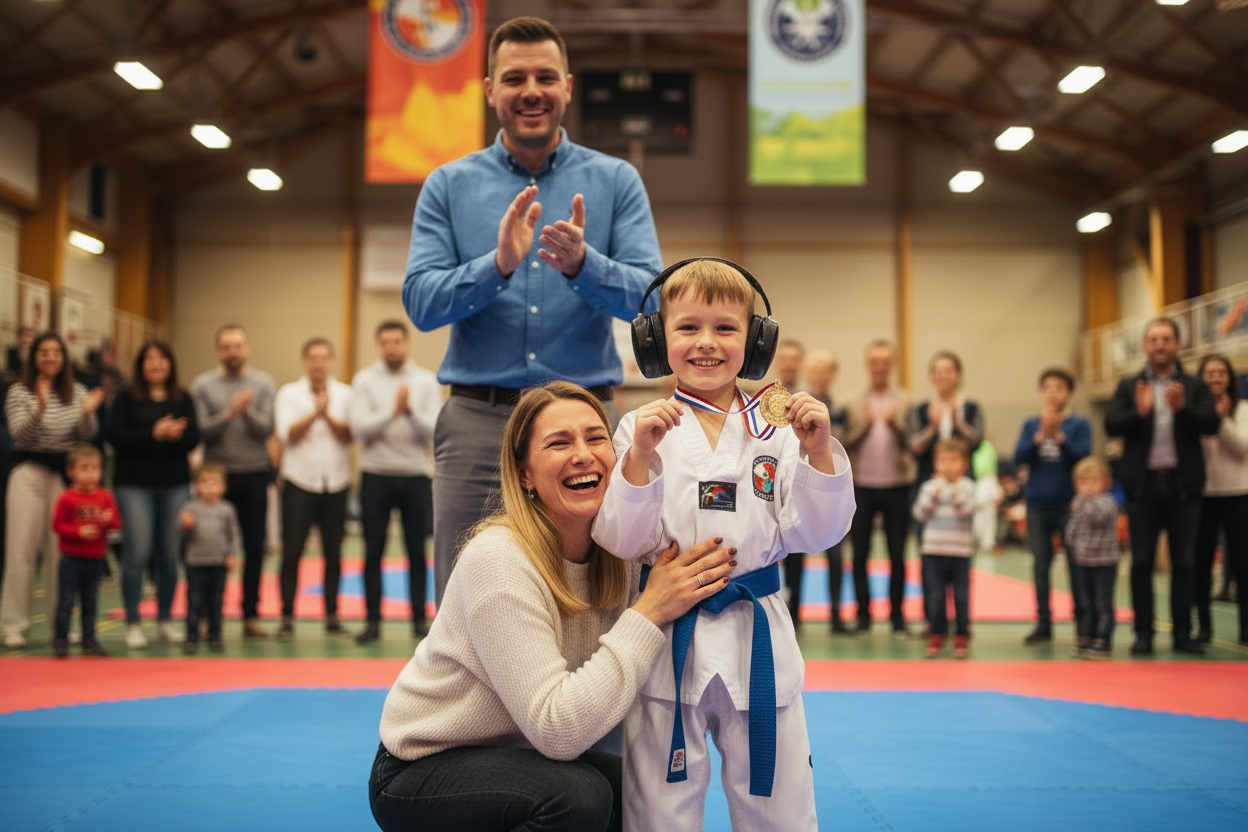
For many families raising children with autism spectrum disorder (ASD), finding the right physical activity can be a challenge. Team sports can feel overwhelming, and unstructured play doesn't always provide the sensory and social structure these kids need. That's where martial arts — particularly disciplines like Taekwondo, Brazilian Jiu-Jitsu, and boxing — can make a remarkable difference.
Why Martial Arts Works for Kids with Autism
Martial arts offer a unique combination of structure, repetition, and individual progression that aligns naturally with how many children with autism learn best. Unlike team sports, there's no reliance on unpredictable group dynamics. Each child progresses at their own pace, earning belts and stripes that provide clear, tangible milestones.
Key Benefits
1. Routine and Predictability
Classes follow a consistent structure — warm-up, technique drills, practice, cool-down. This predictability helps children with autism feel safe and focused, reducing anxiety and allowing them to engage more fully.
2. Body Awareness and Sensory Integration
Martial arts training develops proprioception — the sense of where your body is in space. For children with sensory processing differences, the physical feedback from controlled movements, sparring gear, and mat work can be deeply regulating.
3. Social Skills in a Controlled Setting
Partner drills and respectful bowing rituals teach turn-taking, eye contact, and reading social cues — all in a low-pressure, structured environment. Many children who struggle in traditional social settings thrive in the dojo.
4. Confidence and Self-Regulation
Breaking a board, earning a new belt, or successfully executing a technique builds genuine self-esteem. Martial arts also teaches breathing techniques and emotional control that children can carry into everyday life.
5. Physical Fitness
Regular training improves coordination, balance, strength, and cardiovascular health — all areas where children with autism can benefit from targeted, enjoyable physical activity.
Tips for Parents Getting Started
- Visit the school first. Look for instructors with experience working with neurodiverse children and a patient, encouraging teaching style.
- Start with a trial class. Let your child experience the environment before committing.
- Invest in proper gear. Well-fitted, comfortable protective equipment helps children feel secure and reduces sensory distractions during training.
- Communicate with the instructor. Share your child's specific needs, triggers, and strengths so the instructor can tailor their approach.
The Right Gear Makes a Difference
At NEMEA GEAR, we design protective equipment with young athletes in mind — lightweight, properly sized, and built for comfort during long training sessions. Whether your child is stepping onto the mat for the first time or competing at their first tournament, having gear that fits well and feels good removes one more barrier to participation.
Every child deserves the chance to discover what they're capable of. Martial arts might just be the place where your child finds their confidence, their community, and their strength.